
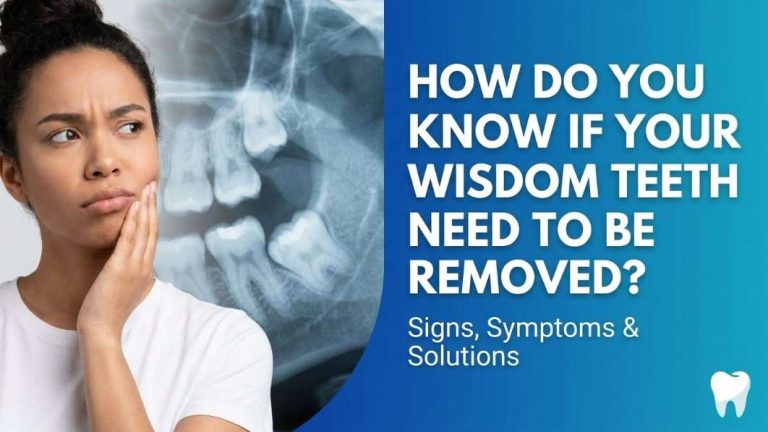
Wisdom teeth have a reputation for causing trouble, but not everyone actually needs them out. Some people go through their twenties with four extra molars and never feel a thing. Others wake up one morning with a throbbing jaw and a swollen cheek and realize something has gone wrong in the back of their mouth.
This guide walks through the real warning signs that your wisdom teeth need to come out, what’s happening underneath the gums when those signs appear, and how your dentist decides whether extraction is the right call. If you’ve already noticed pain, swelling, or pressure in the back of your jaw, don’t wait it out. Book a Schedule an Appointment visit with our team and we’ll take a look.
For related reading, our guide on Is My Tooth Infection an Emergency? can help you figure out whether the pain in the back of your mouth needs same-day attention.
What Are Wisdom Teeth and When Do They Come In?
Wisdom teeth are your third molars, the last set of teeth to develop. They sit at the very back of your mouth, one in each corner, and most people get four of them. They usually start pushing through the gums somewhere between ages 17 and 25, which is why dentists sometimes call them “the teeth of young adulthood.” [2]
Not everyone ends up with all four. A meaningful chunk of the population is born missing one or more wisdom teeth entirely, and in those cases there’s nothing to remove and nothing to worry about. For everyone else, the question isn’t whether the teeth exist but whether they have enough room to erupt cleanly, sit in a functional position, and stay healthy long-term. [2]
Your dentist can usually spot wisdom teeth on a panoramic X-ray years in annual check-ups before they try to come in. This is why teenagers and people in their early twenties often get a heads-up about their third molars at a routine cleaning, long before any symptoms appear. [3]
The Most Common Signs Your Wisdom Teeth Need to Be Removed
Persistent Pain in the Back of Your Jaw
The most obvious warning sign is pain. When a wisdom tooth is trying to push through the gum but can’t, the pressure builds up and creates a deep, aching soreness at the very back of your mouth. The pain can be steady or it can come and go in waves, and it’s often worse when you chew, yawn, or brush back there. [4]
What makes wisdom tooth pain different from a regular toothache is the location and the pattern. It doesn’t usually feel like a sharp pinpoint. It feels more like pressure, throbbing, or a dull ache that seems to sit behind your last molar. Some people describe it as feeling like something is stuck in their gums, because in a sense, it is. [4]
Swollen, Red, or Bleeding Gums
Wisdom tooth trouble almost always shows up in the gum tissue before it shows up anywhere else. The gums around a partially erupted wisdom tooth tend to get puffy, tender, and red, and they often bleed when you brush or floss. You might also notice a little flap of tissue sitting over the tooth, which is actually the gum trying and failing to pull back out of the way. [4]
That flap is the problem. Food and bacteria get trapped underneath it, and because you can’t really clean under there with a toothbrush, the area becomes a breeding ground for infection. [5]
Jaw Stiffness or Trouble Opening Your Mouth
If you’re having a hard time opening your mouth all the way, or your jaw feels stiff and locked up, that’s a sign the tissue around a wisdom tooth is inflamed. Swelling can spread from the gums into the muscles of the jaw, making it uncomfortable to eat, talk, or even yawn normally. This kind of stiffness usually gets worse over a few days rather than better, and it’s often paired with pain and swelling in the same area. [5]
If pain or swelling is making it hard to eat, sleep, or open your mouth, our team can take a look and help you figure out what’s going on.
Book a Wisdom Tooth Evaluation
Bad Breath or a Bad Taste That Won’t Go Away
Chronic bad breath that sticks around no matter how much you brush is a surprisingly reliable signal. So is a persistent bitter or metallic taste in your mouth. Both point to bacteria building up around a wisdom tooth that you can’t reach with normal oral hygiene. When food particles and plaque get trapped under a gum flap or in a hard-to-clean crevice next to a tilted wisdom tooth, the bacteria that feed on them produce odors and byproducts you can actually taste. [4]
Headaches, Earaches, or Facial Pressure
Wisdom teeth don’t just cause pain where they live. Because the nerves in your jaw connect to the rest of your head, pressure from an erupting or impacted third molar can radiate outward. A lot of people show up at the dentist convinced they have a sinus problem or a tension headache, only to find out the real source is a wisdom tooth pushing on nearby structures. If you’re getting recurring headaches, ear pain on one side, or a dull ache along the side of your face, it’s worth having your third molars checked. [6]
Crowding or Shifting of Your Other Teeth
If your front teeth suddenly feel crooked or crowded, or you notice your bite feels slightly off, a wisdom tooth could be the reason. When a third molar tries to come in sideways or doesn’t have enough space, it can press against the tooth in front of it. Whether wisdom teeth are the primary cause of late-in-life crowding is actually debated in the research, but most dentists will tell you they’ve seen plenty of cases where shifting started around the same time the wisdom teeth were erupting. [4]
What Does “Impacted” Actually Mean?
A wisdom tooth is called impacted when it can’t fully erupt into its normal position. That can happen for a few reasons. Sometimes there isn’t enough space in the jaw, so the tooth runs out of room and stays stuck under the gum. Sometimes it’s angled wrong, tipping forward into the tooth in front of it or leaning sideways. And sometimes it comes only halfway through, which is called a partial impaction and is often the most problematic type of all. [4, 7]
Impacted wisdom teeth are extremely common. According to the Cleveland Clinic, citing data from the American Association of Oral and Maxillofacial Surgeons, roughly 90% of people have at least one impacted wisdom tooth. The reason impaction matters is that a tooth which can’t erupt properly usually can’t be cleaned properly either, and that’s where most of the downstream problems begin. [4]
Fully impacted wisdom teeth, which stay completely buried under the gum and bone, often cause no symptoms for years. But that doesn’t automatically mean they’re safe. Some dentists recommend removing them anyway, especially in younger patients, because the risks of surgery go up as you get older and the bone around the tooth gets denser. [1]
Pericoronitis: The Infection Most People Don’t See Coming
If you’ve ever heard someone complain about a “wisdom tooth infection,” there’s a good chance they were actually dealing with pericoronitis. Pericoronitis is inflammation and infection of the soft tissue around a partially erupted tooth, and it almost always involves a lower wisdom tooth. Symptoms range from mild pain and a bad taste in the mouth to severe swelling, fever, and difficulty opening the jaw. [5]
Here’s how it usually plays out. A wisdom tooth starts to come in but only makes it halfway through the gum. A flap of gum tissue covers part of the tooth. Food and bacteria get trapped under the flap, and because you can’t clean under there effectively, the area becomes inflamed. Once the infection sets in, the gum gets swollen and painful, pus can form, and the pain often radiates into the jaw and ear. [5]
Mild pericoronitis can sometimes be managed with a thorough cleaning of the area, warm salt water rinses, and antibiotics if needed. But if it keeps coming back, which it often does, the long-term solution is usually to remove the wisdom tooth so the flap of gum tissue disappears along with it. [5]
Cysts and Other Less Obvious Problems
One of the reasons dentists take impacted wisdom teeth seriously, even when they aren’t hurting, is that they can develop cysts. A dentigerous cyst is a fluid-filled sac that forms around an unerupted tooth, and impacted wisdom teeth are one of the most common places they show up. Left untreated, these cysts can cause infections, tooth loss, and in more serious cases, damage to the surrounding jawbone. [8]
The frustrating thing about cysts is that they often don’t cause pain until they’ve already grown large enough to push on nearby teeth or nerves. Most are caught on routine dental X-rays by a dentist who was looking for something else entirely. That’s one of the strongest arguments for keeping up with your regular checkups even when nothing feels wrong in the back of your mouth. [8]
Tumors associated with impacted wisdom teeth are rare, but they do happen, and they’re another reason to take imaging of your third molars seriously rather than assuming “no pain, no problem.” [9]
Decay and Gum Disease in Nearby Teeth
Even when a wisdom tooth itself isn’t hurting, it can still cause trouble for the tooth next door. When a third molar comes in tilted or only partially erupts, it creates a deep pocket between itself and the second molar in front of it. That pocket is almost impossible to keep clean, and over time, the second molar can develop decay on its back surface or start losing bone support from gum disease. [10]
This is one of the quieter reasons dentists recommend removal. You might have zero pain from the wisdom tooth itself, but an X-ray can show that the neighboring molar is starting to break down because of its position. Saving the healthier, more important second molar is often the real reason the third molar needs to go. [1]
An X-ray can reveal trouble brewing long before you feel it, and catching it early often means a simpler procedure and a smoother recovery.
Schedule an X-Ray Consultation
Do Asymptomatic Wisdom Teeth Need to Come Out?
This is probably the most debated question in all of wisdom tooth care, and the honest answer is that it depends. Some dental associations in Europe take a “watchful waiting” position and don’t recommend removing wisdom teeth that aren’t causing problems. Other groups, including many oral surgeons in the United States, argue that removal in the late teens or early twenties is easier, safer, and prevents future issues that are likely to appear anyway. [11]
A 2020 Cochrane review looked at the evidence for both approaches and concluded that there isn’t enough high-quality research to say definitively whether asymptomatic, disease-free impacted wisdom teeth should be removed or kept. What the review did find is that a meaningful share of people who choose to keep their wisdom teeth end up needing them removed later anyway, often within a few years, because problems eventually show up. [10]
The practical takeaway is that this is a decision to make with your dentist, not a universal rule. A wisdom tooth that’s fully erupted, functional, and easy to clean is usually fine to leave alone. One that’s impacted, hard to reach, and sitting next to an important second molar is a different story. Our team at Englewood Dental Oral Surgery can walk you through the specifics of your situation and help you weigh the options. [10]
How Dentists Decide Whether Extraction Is Necessary
When you come in with wisdom tooth concerns, the evaluation usually starts with a conversation about symptoms and a quick visual exam. But the real information comes from imaging. A panoramic X-ray gives your dentist a wide view of all four third molars, including the ones that haven’t erupted yet, and shows their position relative to the nerves in your lower jaw and the roots of your other teeth. [12]
Your dentist is looking for a few specific things. Is the tooth impacted, and if so, how severely? Is it angled in a way that could damage the second molar? Is there any sign of decay, infection, or cyst formation? How close is the tooth to the inferior alveolar nerve, which runs through your lower jaw and can be injured during extraction? The answers to those questions determine whether extraction is recommended, how urgent it is, and whether a general dentist can handle it or whether an oral surgeon should be involved. [12]
If your case is straightforward, extraction can often happen in the same office that does your routine cleanings. More complex cases, especially ones involving deeply impacted lower wisdom teeth or teeth sitting very close to the nerve, are usually referred to a specialist. [12]
When to Call a Dentist Right Away
Most wisdom tooth issues aren’t emergencies, but some are. If you have significant swelling in your face or jaw, a fever, difficulty swallowing, or pain severe enough that it’s interfering with sleep or eating, you should be seen quickly rather than waiting for a routine appointment. These symptoms can indicate a spreading infection, and wisdom tooth infections that are left to progress can become serious in a small number of cases. [5]
Swelling that moves from the gum into the cheek or under the jaw, along with fever or trouble opening your mouth, is a sign the infection isn’t staying contained. That’s the point at which a phone call beats a web search. [5]
Frequently Asked Questions
At what age should you get your wisdom teeth removed?
If removal is needed, the late teens and early twenties are generally considered the best window. At that age, the roots of the wisdom teeth aren’t fully formed yet, the surrounding bone is less dense, and recovery tends to be faster and smoother. Removal later in life is still possible and usually goes well, but the procedure can be a bit more involved. [1]
Do all wisdom teeth have to be removed?
No. If your wisdom teeth come in straight, have enough room, and you can clean them the same way you clean your other molars, there’s often no reason to remove them. The ones that cause problems are the ones that can’t erupt properly or can’t be kept clean. [1]
How long is recovery after wisdom teeth removal?
Most people feel noticeably better within three to four days, and by about a week most of the swelling and soreness have resolved. Full healing of the gum and underlying bone takes longer, often several weeks, during which you’ll want to avoid smoking, drinking through straws, and anything that could disturb the healing site. [12]
Can wisdom teeth cause headaches?
Yes, they can. Pressure from an erupting or impacted wisdom tooth can radiate through the jaw muscles and trigger tension-type headaches, ear pain, or facial pressure. If you’re getting recurring headaches on one side of your head and you’re in the typical wisdom tooth age range, it’s worth having your third molars checked. [6]
Is it safe to leave impacted wisdom teeth alone?
Sometimes, yes. Fully impacted wisdom teeth that aren’t causing symptoms and show no signs of cyst formation, decay, or damage to nearby teeth can often be monitored rather than removed. Your dentist will typically recommend periodic X-rays to keep an eye on them. If anything changes, the plan changes. [10]
How do I know if my wisdom tooth pain is an emergency?
Pain alone usually isn’t an emergency. Pain combined with significant swelling, fever, trouble swallowing, or a hard time opening your mouth is a different story. Those signs suggest an infection that may be spreading, and you should be seen the same day if possible. [5]
The Bottom Line
Wisdom teeth don’t always need to come out, but when they do, ignoring the signs rarely makes things better. Persistent pain, swollen gums, recurring infections, crowding of your other teeth, or findings on an X-ray like cysts or decay are all reasons to take action sooner rather than later. The younger you are when the problem is addressed, the easier the whole process tends to be.
If you’re in the Englewood, NJ area and you’re wondering whether your wisdom teeth are the cause of what you’re feeling, our team is happy to take a look and give you a straight answer. Schedule an Appointment and we’ll help you figure out the right next step.
Whether it turns out to be a wisdom tooth or something else entirely, the sooner you know, the easier the fix tends to be.
References
- https://www.mayoclinic.org/diseases-conditions/wisdom-teeth/expert-answers/wisdom-teeth-removal/faq-20058558
- https://my.clevelandclinic.org/health/body/23223-wisdom-teeth
- https://myoms.org/what-we-do/wisdom-teeth-management/
- https://my.clevelandclinic.org/health/diseases/22296-impacted-wisdom-teeth
- https://my.clevelandclinic.org/health/diseases/24142-pericoronitis
- https://health.clevelandclinic.org/wisdom-teeth-headache
- https://myoms.org/what-we-do/wisdom-teeth-management/impacted-wisdom-teeth/
- https://my.clevelandclinic.org/health/diseases/dentigerous-cyst
- https://pmc.ncbi.nlm.nih.gov/articles/PMC4439685/
- https://www.cochranelibrary.com/cdsr/doi/10.1002/14651858.CD003879.pub5/full
- https://www.apha.org/policy-and-advocacy/public-health-policy-briefs/policy-database/2014/07/24/14/29/opposition-to-prophylactic-removal-of-third-molars-wisdom-teeth
- https://www.mayoclinic.org/tests-procedures/wisdom-tooth-extraction/about/pac-20395268