
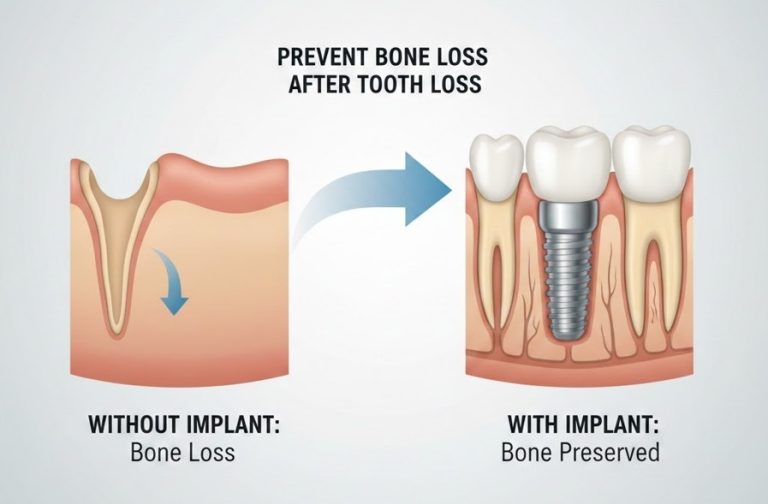
Losing a tooth isn’t just a cosmetic concern. It triggers a biological process that affects the health and strength of your jawbone. When a tooth is lost, the root that once stimulated the underlying bone through everyday chewing and biting is gone. Without this stimulation, the jawbone begins to deteriorate through a process called bone resorption, which can start within months of tooth loss if not addressed. [1]
This bone loss can lead to significant issues, including changes to your facial structure, premature aging, shifting neighboring teeth, and complicating future dental treatments. Unlike dentures or bridges, dental implants offer more than aesthetic restoration. They can actively prevent bone loss and support long-term oral health.
How Dental Implants Prevent Bone Loss After Tooth Loss
Dental implants are the only tooth replacement option that replaces both the visible crown and the underlying root, which allows them to interact biologically with your jawbone in ways other restorations can’t. Here’s how implants prevent bone loss:
Osseointegration: The Key Biological Process
When a dental implant is placed into the jawbone, the body responds by fusing the implant with the bone in a process known as osseointegration. This creates a stable connection that mimics the function of a natural tooth root.
This fusion isn’t just structural. It restores mechanical stimulation to the jawbone, signaling the body that the bone is needed. When forces from chewing are transmitted through the implant, the bone remains active and strong, slowing or stopping resorption. Implants essentially “tell” your jawbone it still has a job to do.
Mimicking Natural Tooth Function
Natural tooth roots send pressure and signals to the bone with every bite. When a tooth is missing, the lack of stimulation triggers the body to absorb unused bone tissue. Implants restore this stimulation because they behave much like natural tooth roots, making them the only replacement that helps maintain jawbone density and volume.
Dental implants don’t just replace missing teeth, they help maintain jawbone strength and facial structure.
Request an Implant Evaluation at Englewood Dental today!
Why Bone Loss Matters More Than Just Looks
Bone loss after losing a tooth isn’t only noticeable in your smile. It also affects overall oral health and facial structure:
- Jawbone shrinkage: Without stimulation, bone diminishes and may compromise adjacent teeth.
- Facial changes: When bone decreases, cheeks and lips lose support, and the lower face may appear sunken.
- Difficulty chewing: As bone weakens, your ability to bite and chew effectively can diminish.
- Future treatment challenges: Advanced bone loss may require grafting before implants can be placed later.
Dental Implants vs. Other Tooth Replacement Options
Not all restorative solutions prevent bone loss equally:
- Dentures: These sit on top of the gums and do not stimulate the jawbone, so bone resorption continues. [2]
- Bridges: While they fill the gap, bridges rely on adjacent teeth rather than the bone itself and don’t prevent resorption. [2]
- Dental Implants: By integrating into the bone and stimulating it, implants uniquely preserve bone health.
Because of this, dental implants are considered the gold standard for long-term tooth replacement and bone preservation.
Benefits of Dental Implants for Bone and Jawbone Health
The benefits of dental implants go beyond replacing missing teeth. Some of the key benefits of dental implants include:
- Preserving jawbone and preventing bone resorption
- Maintaining bone density and bone height
- Supporting natural chewing and speech
- Reducing the risk of further tooth loss
- Improving overall oral health
Dental implants preserve bone by maintaining stimulation to the jawbone, which helps prevent the bone from deteriorating over time.
Tooth loss can lead to jawbone deterioration if left untreated. Dental implants can help preserve bone and protect your long-term oral health.
Schedule a Dental Implant Consultation at Englewood Dental today
Dental Implant Consultation and Treatment Planning
A dental implant consultation is an important first step in determining whether implants are right for you. During the consultation, implant dentists evaluate bone health, jawbone structure, and overall oral condition.
If significant bone loss has already occurred, a bone graft may be recommended before implant placement. Bone grafting restores lost bone and creates a strong foundation for the implant to fuse successfully.
Once the implant is placed, the healing process allows the implant to fuse with the jawbone. After healing, a custom artificial tooth is attached, completing the dental implant treatment.
Scientific Evidence and Long-Term Outcomes
Current research supports the role of implants in stabilizing bone levels over many years. For example, clinical data show stability of bone levels around implants in long-term follow-ups, even after 15 years, when implants are placed properly and maintained.
This evidence underscores implants not just as cosmetic solutions, but as biologically sound treatments that actively preserve your jawbone’s integrity.
Best Practices for Bone Health After Getting Implants
Taking care of your implants also supports bone health:
Maintaining good oral hygiene habits, including brushing, flossing, and regular dental check-ups, is essential for preventing infection and preserving bone around the implant.
A balanced diet rich in calcium and vitamin D further supports bone-building processes.
Avoiding harmful habits like smoking, along with professional monitoring of implant stability over time, ensures the bone continues to stay healthy and active around the implant.
Concerned about bone loss after tooth loss? Dental implants may help prevent further deterioration and support a healthier smile.
Request an appointment at Englewood Dental today
Common Questions About Implants and Bone Loss
Why do bone levels drop after a tooth is lost?
Bone resorption happens because the jawbone no longer receives the mechanical stimulation from chewing that a tooth root provides. The body then reduces the amount of bone in that area since it’s no longer “needed.”
Can implants grow new bone in areas that have already lost bone?
If significant bone loss has occurred, a bone graft may be needed before implant placement. However, once placed, implants help preserve existing bone and prevent further loss.
Are bone grafts necessary with implants?
Sometimes. If the bone volume is insufficient to support an implant, grafting restores the foundation needed for implant stability.
Protect Your Jaw with Dental Implants
Dental implants don’t just restore what’s missing, they preserve your jawbone, protect your facial structure, and support long-term oral health in a way that no other tooth replacement option can. By acting not only as functional replacements but as biological stimulators of bone activity, implants ensure your smile stays strong and healthy for years to come.
If you’re considering tooth replacement options, schedule a consultation at Englewood Dental and learn about how dental implants can help you prevent bone loss after tooth loss and maintain a confident, lasting smile.
References:
- https://en.wikipedia.org/wiki/Platform_switching
- https://thedentalimplantguide.org/resource/bone-resorption/Bridges
- https://www.mdpi.com/2304-6767/13/7/299